
The Raw Fact
Parashat VaYeira and "The Real Hero" by Yehuda Amichai

For Parashat VaYeira (Genesis 18:1-22:24), I present a poem on Akeidat Yitzchak, the binding of Isaac.
The Akeida has inspired piyyutim, christological interpretations, and diverse modern treatments. Many retell the story adding detail to enhance its impact. Many take the Akeida as a paradigm for martyrdom. And many of the modern poems, like many modern ‘interpretations’ of the Akeida, subvert the story.
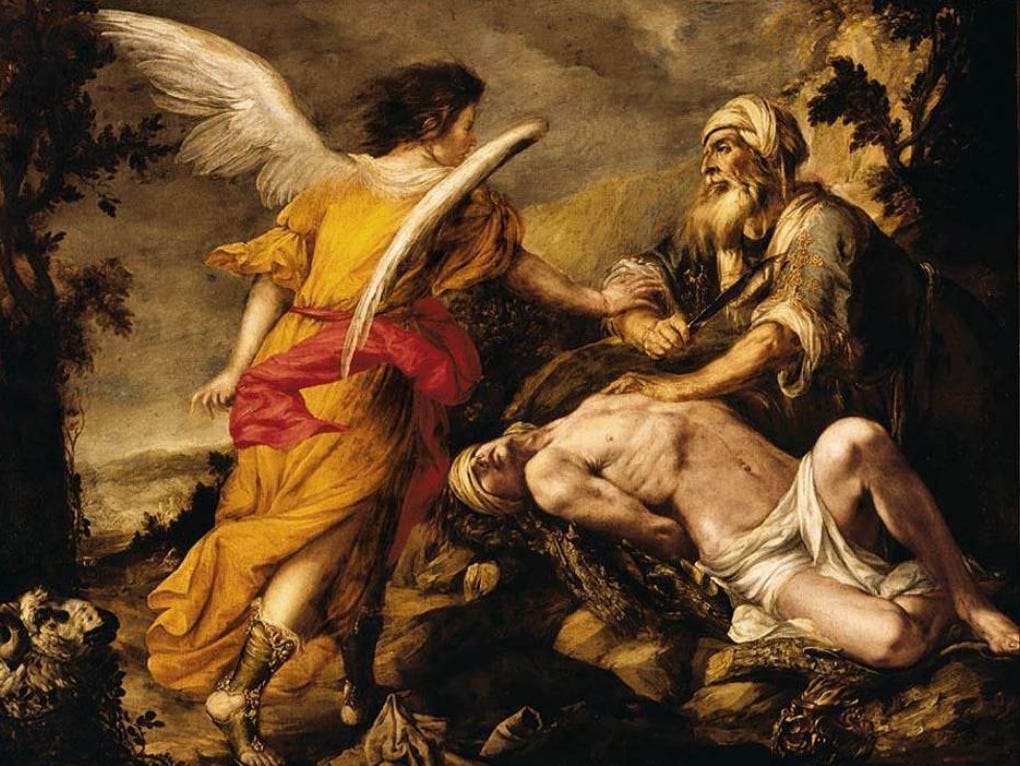
The Sacrifice of Isaac, by Juan Valdes Leal (1659)
These subversions claim Avraham failed Hashem’s test for not protesting against the command, they say Avraham was a psychopath, they portray Avraham as betraying Sarah, they unironically parrot the words which, according to midrashim, the Satan spoke to Sarah, they blame God for mandating the Akeida, they ‘blame the victim’ criticizing Yitzchak for his passivity, etc., etc.. In short, they recite the suppositions and pretentions of modernity with embarrassing lack of self-awareness.
I despise the subversions.
But one impulse underlying them is undeniable. Like the Holocaust, the Akeida is the command of Hashem, and it’s an undigestible horror. Stripping away emotion, the Akeida has the logical form of a paradox: Hashem said that Yitzchak will continue the line of Avraham, and Hashem commanded the sacrifice of still childless Yitzchak. Even when the paradox resolves with the ram taking Yitzchak’s place, the command for the Akeida remains a terror. The mind reels from the raw fact and wishes to explain the ordeal.
Enter Yehuda Amichai’s poem הגיבור האמיתי של העקידה ‘The Real Hero of the Akeida’ (published 1963). ‘The Real Hero’ subverts the Akeida narrative, as Amichai often does with narratives, and makes its hero, not Avraham or Yitzchak, but the ram.
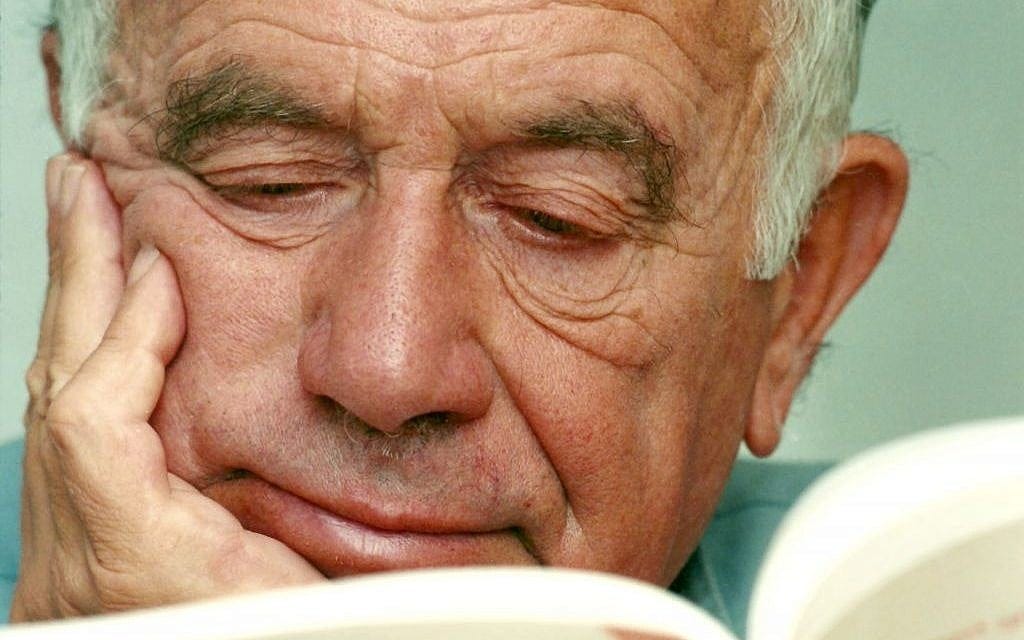
Yehuda Amichai in 1986. (Moshe Shai/Flash90)
The trend among interpreters is to take this subversion at face value and to read the poem as a polemic against glorifying sacrifice in Israeli society or more broadly. The ram, in other words, is the hero, with the ram understood as a symbol for people of less power who are caught and sacrificed for the purposes of the powerful. These readings, however, have problems. First, the ram is not a hero in any sense of the word, whether in Genesis or in the poem. Then, as one attends carefully to the poem’s details, the contradictions mount.1
Best read with Frostian irony, the poem presents the narrative of a satirical figure in order to lampoon clueless revisionists and those who romanticize victims and victimhood. It is a subversion of subversions. It does not affirm any particular interpretation of the Akeida. It is a reductio ad absurdum that illustrates how explanations of the events that shape us are feeble, whether justifications or blameful condemnations. Thus, it pushes us back into contact with the shear power and reality of the Akeida. The poem shines a light on us who would flee the paradox and horror of the Akeida by taming it and reducing it to a morality tale for whatever we like, be it Orthodox, Zionist, pacifist, whatever. It catches us who when faced with the assertion of reality beyond our grasp wish to turn it into a magazine photograph arranged to advertise our take on things.
Here is the poem, first in the Hebrew original (published in Amichai’s 1963 collection שירים 1948-1962), and then in a translation:
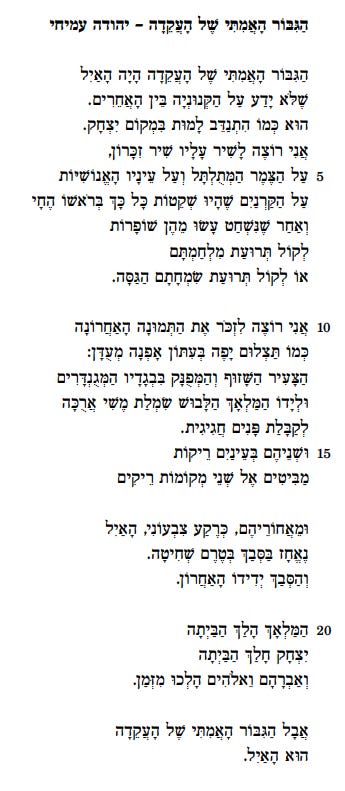
The Real Hero
By Yehuda Amichai, translated by Chana Bloch and Stephen Mitchell, in The Selected Poetry of Yehuda Amichai (University of California Press, newly revised and expanded edition, 1996.
Failed to render LaTeX expression — no expression found
The real hero of the Isaac story was the ram,
who didn’t know about the conspiracy among the others.
It was as if he had volunteered to die in Isaac’s place.
I want to sing, for him, a memorial song,
about his curly wool and his human eyes,
about the horns that were so silent on his living head,
and how they made those horns into shofars when he was slaughtered
to sound their battle cries
or to blare out their obscene joy.

I want to remember the last frame—
like a photo in an elegant fashion magazine:
the tanned, pampered youth in his finest of frocks
and by his side the angel, dressed in a long silk gown
as if for a festive reception.
And the two of them, with desolate eyes,
looking out to two distant desolate places.

And behind them, as a colorful background, the ram,
entangled in the thicket before the slaughter.
The thicket, his final friend.

The angel departed homeward.
Isaac departed homeward.
And Abraham and God had parted ways a while back.

But the real hero of the Binding
was the ram.
The Akeida resounds through our liturgy and history because we continue to feel it, we remember it, we remember it on Rosh HaShanah, the Day of Remembrance. And in remembering the Akeida, we feel the contingency of our lives, the wild surprise of our existence, and the infinite will of Being who gives us being.
The narrator says that the ram ‘volunteers to die’ (line 3) when the ram doesn’t volunteer but is caught in the brush; he describes the brush as the ram’s ‘last friend’ (line 19) when it’s the brush that without any thought of its own sets him up for death; he wishes to sing a song praising the ram as the hero but focuses only the animal’s physical attributes emphasizing the ram’s vulnerability and passivity as well as its fitness for sacrifice (lines 4-9); the song he sings is maudlin, even describing the animal’s eyes as ‘human’ (line 5). And according to one translation, line 22 should be read to mean that the relationship between Avraham and God ended before the Akeida, blatantly contradicting the text. The narrator is so out-of-touch, his subversion proves absurd.